In April 2018, I was invited to a mission trip up north in a town called Kaikohe. Camera in hand, I nodded along. Little did I know, this trip would mark something in me forever.
This mission trip was a big deal for the church since we had missionaries from the United States. We visited and stayed with a local Māori church in Kaikohe to learn more about the country and its people. Our first order of business was driving to a lookout with panoramic views of the historical land. It was where tribes forged communities and where local wars destroyed them.
Listening to the stories, I sat there trying to hold back my tears and I did not understand why. I started breaking down as the kaumatua (Māori elder) talked about how their people stood their ground. They have fought to preserve their culture, art, and language. If you’re living in New Zealand, you know how evident this fight is until now. They are proud of their unique voice and for some reason, it broke me. A beautiful friend of mine noticed my silence. She hugged me and said “I’m sure you’re taking this in differently than everyone else”.
And she was right. Everyone else was white. Their conversations consisted of remorse and guilt for what their ancestors had done. Meanwhile, I was there, feeling alone, with a myriad of emotions going on at once – shame, confusion and jealousy. I felt ashamed that English is my first language even though I was born and raised in the Philippines. I felt confused because I do not know what a pure Filipino looks like. I felt jealous that Māori are proud of who they are because I was definitely raised not to be proud of being Filipino… And how can we be? We don’t even know who we are.
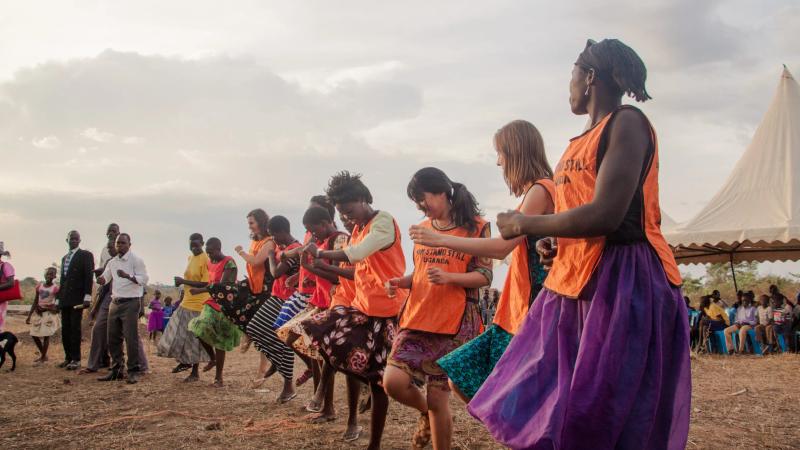
This was not the first time that year I felt a nudge in this direction. In February 2018, I went on a two-week mission trip to Uganda. It’s a small country found in East Africa only over three decades fresh out of a civil war. We visited underfunded schools, recovering villages, warrior tribes, South Sudan refugee camps and local churches. In each place we went, they greeted us with various customs specific to their tribe. It was refreshing to see and something I did not know I yearned for my country.
It is ironic that moving overseas prompted me to grow the little awareness I have of my own nationality. What was a Filipino like before the Spanish and American regimes? How has this affected who we are today? Hopefully, I can break it down and summarize it in five bullet points.
History. If you are reading this without any knowledge about the Philippines, here is a very shortened version of our past. The Philippines is an archipelago made up of more than 7,000 islands. The early settlers in the Philippines were the Tabon Man, Negritos (or the Aetas) and Malays. In 1521, Ferdinand Magellan “found us” and then Spain colonized us for more than 300 years. In 1899, Spain sold us to America when they lost the war. Then in 1934, we declared independence from America. In 1941, the Japanese occupied the Philippines for three painfully long years. It was the most brutal occupation despite its short term. America recaptured us in 1945.
Culture. A lot of who I am is because of colonization. Filipinos were stripped of our identity when Spain colonized us for that long. Our culture is drastically influenced by Spain – our food, main religion, telenovelas, language, and love for fiestas (feasts). Like any other country, geography and social circles also come into play. In the city I grew up in and the social politics I got exposed to, our fashion, language, tv and movies and social etiquette, were heavily influenced by the United States. As a nation, our political set up is also influenced by them.
Language. I grew up in a Chinese-owned Catholic private school. In our history classes, we learned that our native writing system is Baybayin. It’s extinct because the English alphabet took over. And since no one uses it, we were never taught how to write it. English was also taught to us as a first language. We would get demerits, sometimes even have to pay cash as penalty, if we uttered a word of our native tongue called Bisaya. This was a common practice across a lot of private schools. It was not Americans teaching us but Filipinos. That is one huge effect of colonization, even centuries later. We (my generation, at least) were never taught how to formally write or speak Bisaya. As for Tagalog, the official language of the Philippines, it was just one subject every year. Everything else was taught in English. I always share this story in New Zealand because they can’t seem to grasp why I sound American. It was not until one of them said it’s actually pretty fucked up when I realised that it is, in fact, truly fucked up.
There is something about language that makes me feel like I am connected to where I am from and who I am. When I lived away from family for over a year, not being able to speak my language everyday slowly gnawed at who I was without me knowing. There are emotions only best expressed in my mother tongue and Bisayas would even like to argue that our humor is unique. I never laugh as hard as I do when I’m in the company of my own and speaking the words of my own. So why are we trying so hard to lose our own voice and imitate another?
Beauty and Representation. Our standard of beauty is “the straighter the hair, the smaller the waist, the whiter the skin, the more beautiful you are.” According to Statistica (https://www.statista.com/outlook/70020000/123/skin-care/philippines#market-globalRevenue), the skin whitening industry in the Philippines made USD1.467M in revenue for 2020 alone.
Having a lack of diverse representation on tv and film has also greatly impacted this. When we are not bombarded by American actresses on an international scale, we would instead get bombarded by fair-skinned local/Asian celebrities in our national networks. They will be advertising the next best skin whitening product or hair-straightening shampoo. As a result, I grew up being very conscious about keeping my skin as fair as possible. You will always find me indoors, the closest shade when walking on the road or under an umbrella on a hot day. Most of my friends also got their hair permanently straightened. I had quite a strict mom growing up. She did not allow any permanent treatments on my hair which pissed me off as the angsty, insecure teenager that I was.
Since moving to New Zealand, I have gained weight because of the change in diet and climate. I have also gotten tanner because the sky here is different. You can walk under the sun for five minutes and boom, instant tan. My mom and Filipino aunties (titas) still comment about how I gained weight and got darker. That is either how they will greet me or simply openly discuss it with each other while I am in the room.
Us younger Filipino folks get a kick out of it now, but it is a very culturally accepted social interaction. So when I’d joke about this with my friends in New Zealand, they pointed out that it was rude. I’ve noticed this is something they do not practice within their own families. “So your mom doesn’t tell you you’re fat?” That’s just bizarre to me. But then again, it takes an outsider’s perspective to open your eyes on the toxic behaviour that we allow.
Moving forward, I would never tolerate this in my life anymore. No one, especially young girls, should feel insecure because they don’t fit the standards of beauty our culture has perpetuated. It’s been such a personal journey to embrace how my body changed. After a year in New Zealand, I remember looking at myself in the mirror, barely recognizing the woman in front of me. I was darker and 10 kilograms heavier. I had to change my entire wardrobe. Find new colours to complement my new skin tone. Buy new bottoms that would hide the stomach rolls I now have. I wasn’t sure if I liked the woman I saw in front of me. I had to learn how to shut the judging voices I had in my head who have told me I was not thin, light or pretty enough. I embraced the reality that a woman’s body is beautiful in every form, colour and shape. The reality is, weight and skin tone fluctuates but as that fluctuates, my worth does not. As long as we’re healthy, what are we so worked up about?
Indigenous People. I can not stress this enough: We do not have enough conversations about our indigenous tribes. As I mentioned earlier, there are over 7,000 islands in the Philippines so one would not be surprised by our sheer number of indigenous tribes who are non-recognized and highly marginalized. Who they are have just been the butt of a joke for as long as I can remember. Growing up, if someone was too dark, they would get teased as an “Igorot” or a “Negrito.” We were children and we knew nothing but adults did. Yet somehow, adults tolerated this kind of behaviour. The way they have tolerated body shaming. The way they have tolerated upholding unrealistic beauty standards.
The simplest way I can explain colonization is that a bunch of white people came into a nation who already had a way of life and decided for them that their ways of living sucked so they showed them the “right way” to do it. I will never forget the wise words of the Māori pastor who shared his insight on colonization during that mission trip. “They could have knocked on our front door and we would have welcomed them with open arms. Instead, they went through the back door and ambushed us.”
The years of oppression and brainwashing is still so evident in modern society because although these are the people of the land, no one is listening to the indigenous people. So even if they have preserved their customs and traditions by living in the mountains, there is a huge gap in inclusion of our society. Their efforts to be part of government have been rejected. They are one of the most impoverished peoples of our land. While one may argue that their rights are protected, their voice is not heard. They have no seat at the table and that’s heart-wrenching. Who are we to deny the wisdom they carry?
There are parts of me that wonder if they have their own war cry the way Maoris have their hakas? If they have their own voice the way the Africans have their chants? If we, the modern society, can learn from their traditions that have been upheld for centuries? They are the roots of this country.
Until we are able to strengthen and nurture these roots, real reconciliation of what being a true Filipino can never come to fruition.
let that sink in
Please don’t take this the wrong way. I appreciate that Filipinos are globally-competitive. But have we asked ourselves at what cost? We have lost our voice and face for so long that we think the one we have taken on is who we are. But it is not. There are so many aspects about our culture and society we need to address; corruption, poverty, abuse and crab mentality, to name a few. Until we are brave enough to have these conversations, we will always be at the brunt of colonization. We will always be powerless in our words and in our actions. We will continue to tolerate abuse of our rights. We will keep on upholding white as the superior race. We will stay complicit to racial injustice amongst ourselves, people of colour and indigenous people. Until we are able to really look at ourselves, as Filipinos, and take stock on the reality of our brainwashed identities, how do we expect we can impact real, societal change? Has it ever occurred to us that, maybe, just maybe, we’ve been looking for answers far and wide to heal our nation when the answer is right under our noses?